Why The $97 Launch Works: Real Business, No Risk
The $97 Launch isn't about cutting corners. It's about using the same free and low-cost tools that six-figure founders used to start — before they had revenue.
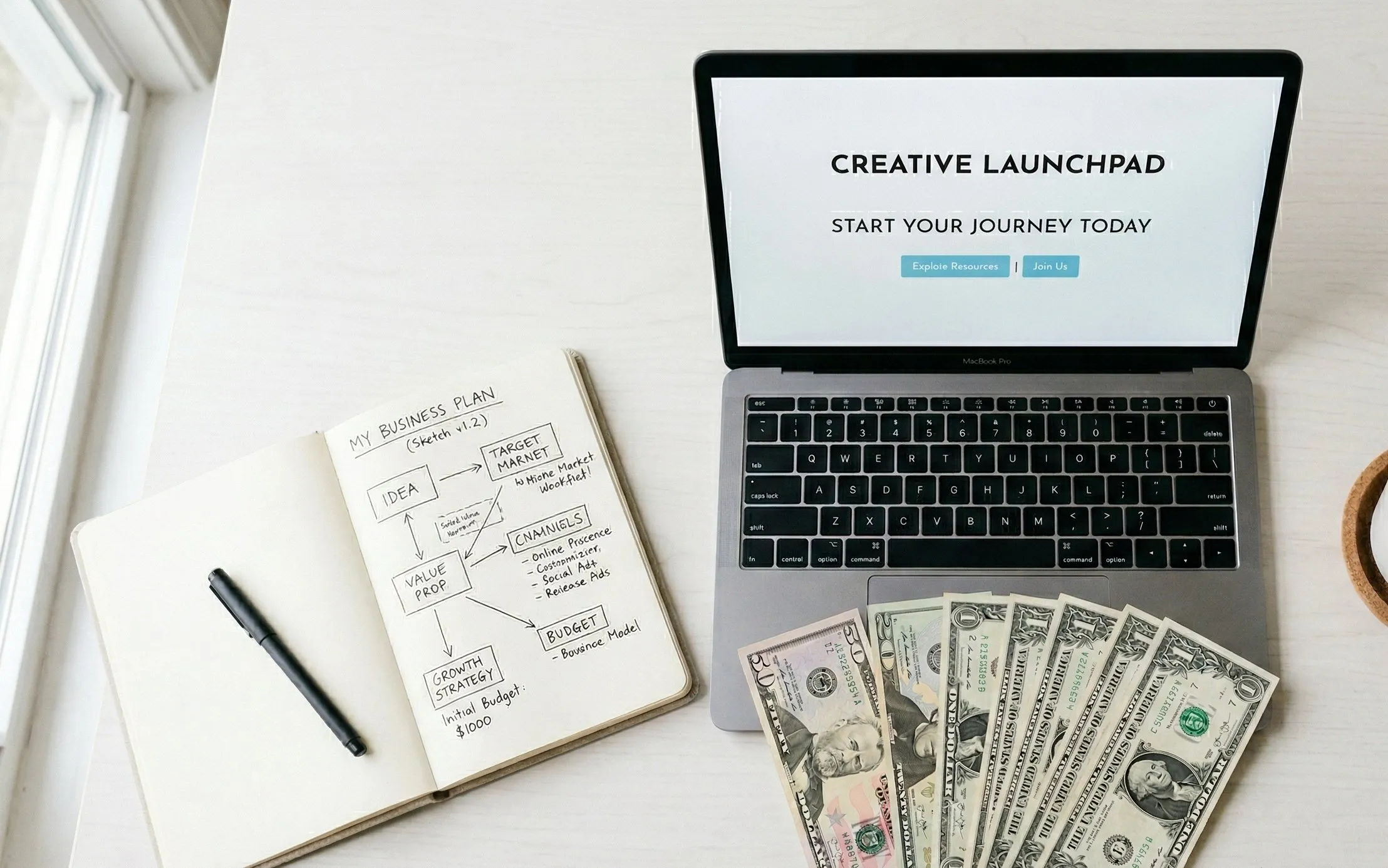
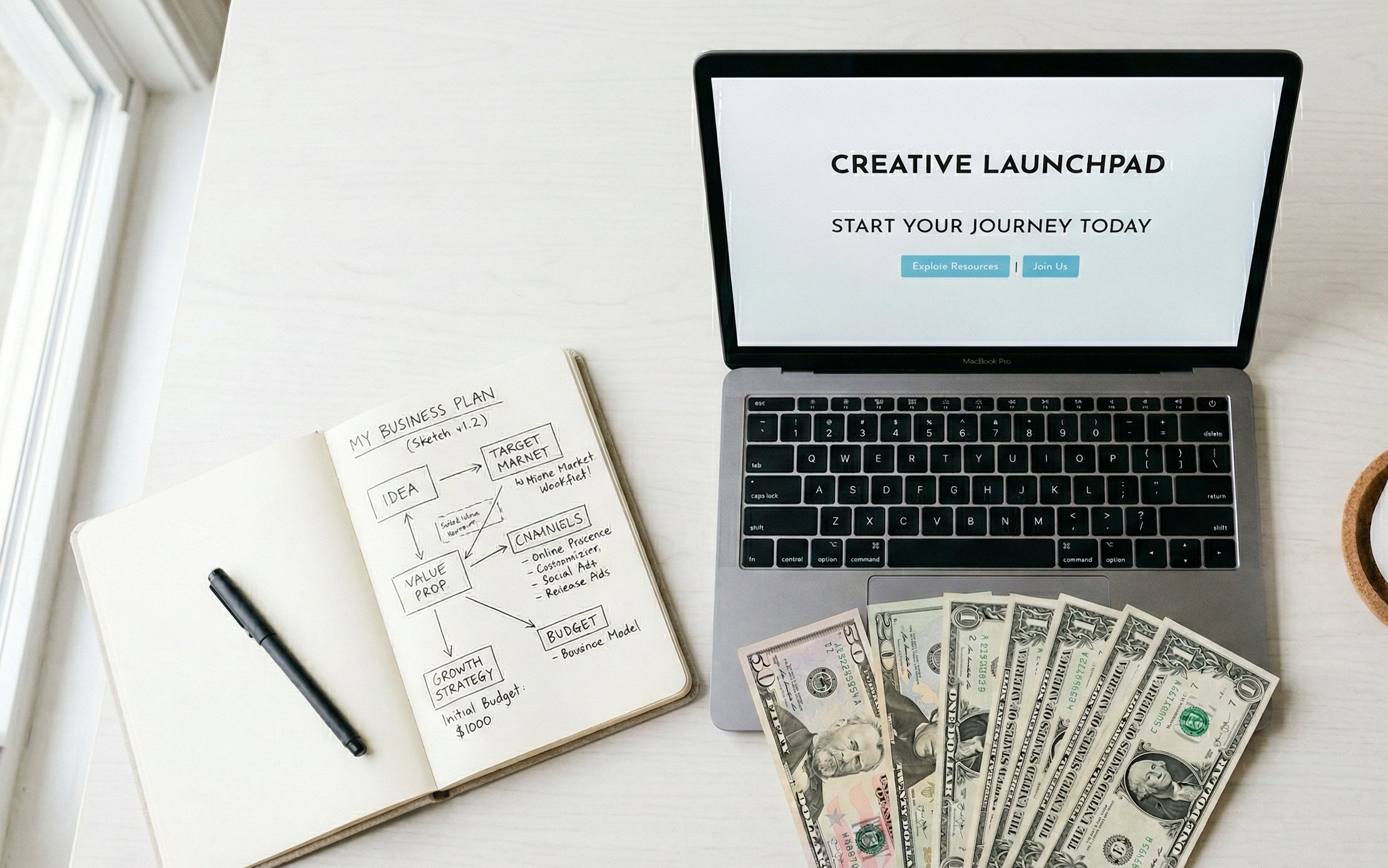
Most business books start with a fantasy: quit your job, raise capital, go all in. The $97 Launch starts with reality — you have bills, a day job, and no safety net. So the question isn't "how do I build a billion-dollar company?" It's "how do I build something that makes money before I run out of it?"
That's the premise of the book, and here's why the approach works.
The Old Model Is Broken
The traditional startup playbook looks like this: write a business plan, get a loan or raise funding, rent an office, hire people, buy software, and hope revenue shows up before the money runs out.
That model works for venture-backed startups with investors who can absorb losses. It doesn't work for a parent in Boise with $200 in discretionary income.
The $97 model flips the script:
- Start with what's free. Hosting, email marketing, design tools, payment processing, and AI assistants — all $0 in 2026.
- Spend only on what you can't get free. A domain name ($10-15) and maybe a premium tool or two.
- Generate revenue before scaling. Don't invest in growth until customers prove the idea works.
- Keep your day job. This isn't about burning bridges. It's about building a second income stream that can eventually replace the first.
Why $97 Specifically?
It's not arbitrary. $97 represents the realistic ceiling for launching a functional digital business — one that has a custom domain, professional appearance, email list, payment processing, and the ability to serve customers.
Most founders in the book spent less than $50. The $97 ceiling gives you margin for a few optional upgrades: a premium Canva plan, a paid scheduling tool, or a small ad budget to test demand.
The point is constraint. When you have $97 instead of $97,000, you make sharper decisions. You skip the logo redesign and ship the product. You skip the LLC paperwork and make your first sale. You skip the perfect website and publish a landing page that converts.
Constraint isn't a disadvantage. It's a filter for what actually matters.
The 30+ Business Models Inside
The book doesn't hand you one idea and say "good luck." It covers more than 30 business models that work at the $97 price point, organized by type:
- Digital products — ebooks, templates, printables, online courses, stock assets
- Services — freelancing, consulting, coaching, virtual assistance
- Content businesses — newsletters, blogs, YouTube channels, podcasts
- Platform businesses — print-on-demand, affiliate marketing, marketplace arbitrage
- Micro-SaaS and tools — no-code apps, browser extensions, API wrappers
- Community businesses — paid memberships, group coaching, masterminds
Each model includes the exact tool stack, realistic cost breakdown, first-sale strategy, and timeline to revenue.
Real Case Studies, Not Hypotheticals
Every business model in the book is backed by real examples of people who started with nothing — or close to it. These aren't Silicon Valley founders with Stanford connections. They're teachers, veterans, stay-at-home parents, and side-hustlers who used free tools to build income streams that eventually outgrew their day jobs.
The case studies cover what worked, what didn't, and how long it actually took. No survivorship bias. No "I made $100K in my first month" fairy tales.
The First-Sale Playbook
The hardest part of any business isn't building the product. It's getting the first person to pay you. The book dedicates an entire section to first-sale strategies — specific, actionable tactics for acquiring your first customer within 30 days:
- Direct outreach — exactly who to contact and what to say
- Community marketing — where to post without being spammy
- SEO basics — how to get free Google traffic with minimal effort
- Social proof shortcuts — how to build credibility before you have customers
- Launch sequences — email and social media frameworks for announcement day
The Mental Game
Half the battle is psychological. The book covers the mindset traps that kill businesses before they launch:
- Perfectionism — shipping a B+ product beats perfecting an A+ product that never launches
- Comparison — your day-one doesn't need to look like someone else's year-five
- Imposter syndrome — you don't need permission or credentials to sell what you know
- Analysis paralysis — picking a model and starting beats researching for six more months
Who This Book Is For
The $97 Launch is for people who want to build a real business but don't have real capital. If you have a laptop, an internet connection, and a weekend, you have everything you need.
It's not for people looking for get-rich-quick schemes. It's not for people who want passive income without effort. It's for people who are willing to do the work but need a map that matches their budget.
Get Started
The book is under $10 on Amazon — less than the domain name you'll buy in Chapter 3. Available in Kindle and paperback.
The only startup cost that matters is the decision to start.